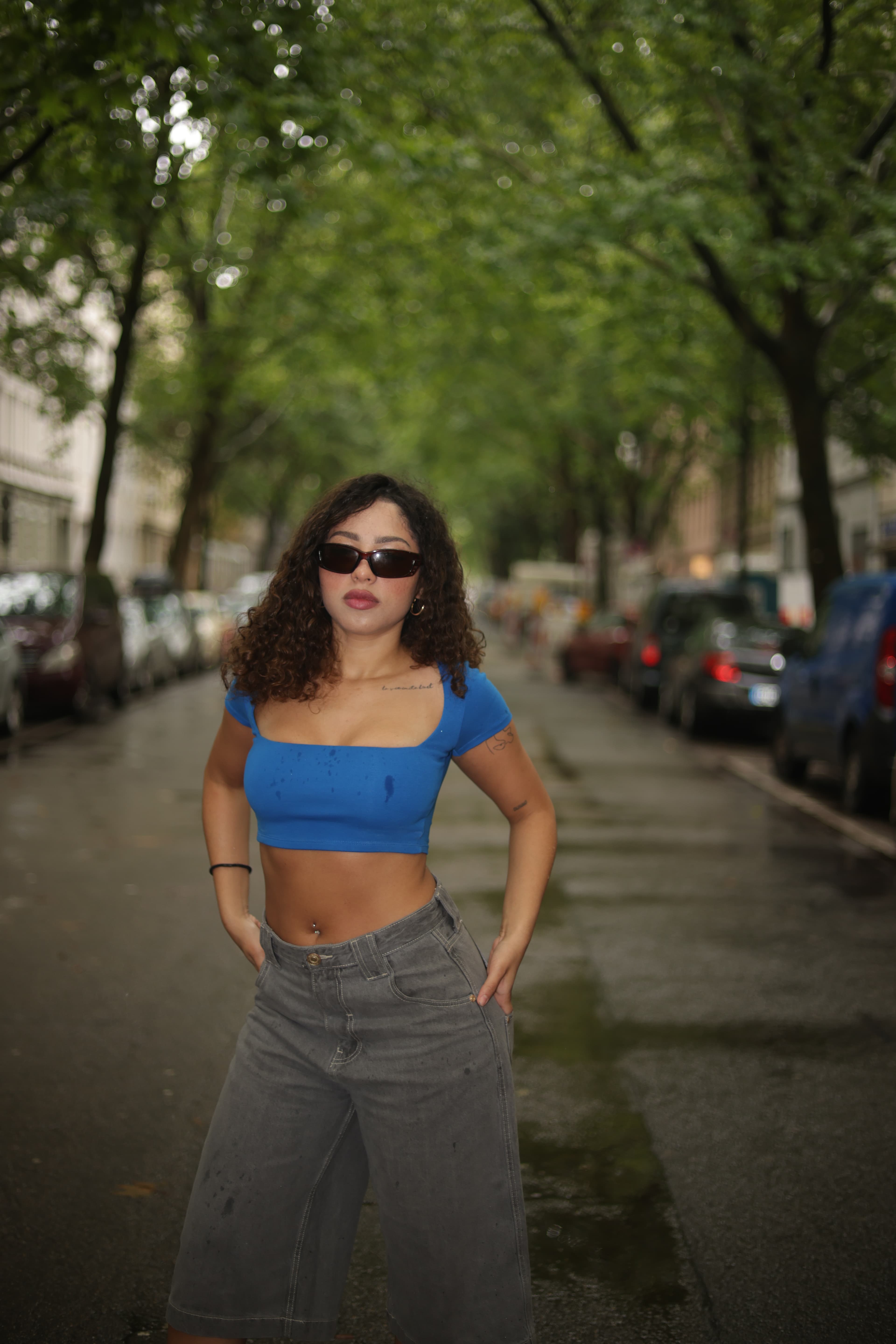
FORTUNATA·Barranquilla, Colombia→Berlin
Latin Electronic / Multi-genre DJ
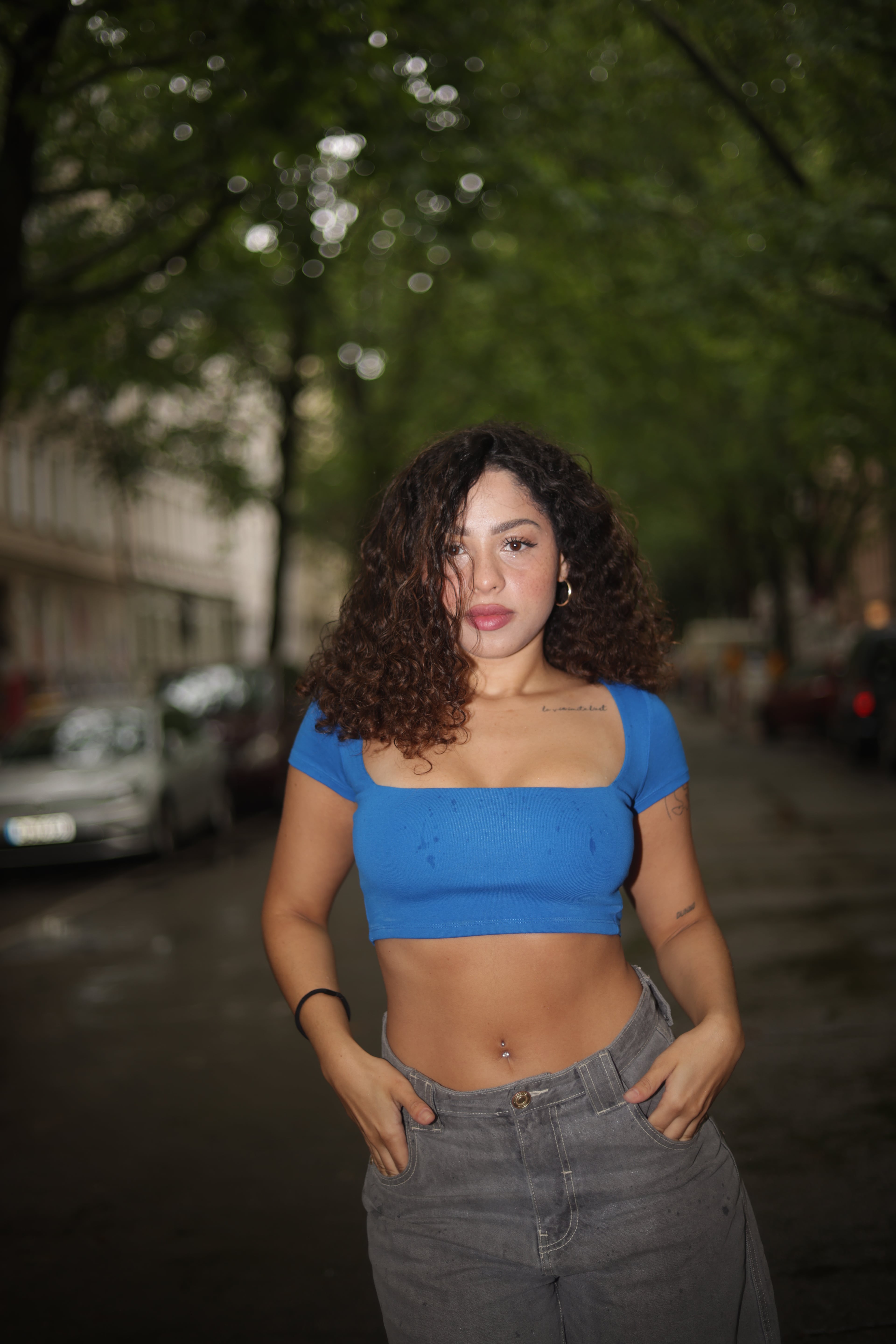

FORTUNATA bought a one-way ticket. Madrid to Berlin, April 27th. There was never a return planned, and going back to Madrid was not really an option. She told her parents it was one month. She had no job lined up, no contacts in the city, and a room that had already fallen through before she landed. That was a year ago. She never went back.
She got here the way she gets everywhere: by refusing to wait for an invitation. Before she had a room in Berlin, before she had a work permit, she was in the DMs of every promoter and collective she could find, pitching herself with personalised messages and attached mixes. Most didn't reply. Enough did. Now she is sitting in a cupcake shop in Prenzlauer Berg, running on four hours of sleep, explaining the whole improbable chain of events.
Her real name is Nataly. She grew up in Barranquilla, on Colombia's Caribbean coast, where vallenato, cumbia, reggaeton, that was the soundtrack to everything. Barranquilla is a carnival city. Music isn't a hobby there, it's just the air. She was dancing before she could name what she was dancing to. At eight, she auditioned for X Factor Colombia. She was queen of the carnival at her school one year. "I was always performing, always singing," she says. "That's just my personality."
But there is a harder story underneath the energy. When FORTUNATA was five, her mother emigrated to Madrid. The plan was to work, to build something, to send for her daughter later. Later turned out to be eight years.
"I was always talking with her," she says. "But I was not seeing her physically." Those eight years changed her. She got used to waiting for things that kept not happening. She calls it faith. She also calls it manifesting.
When she finally joined her mother in Madrid, it was a culture shock inside a reunion. Different culture, different rules, completely unlike anything she had experienced before. And it was freezing. She was thirteen, starting over, and already used to doing everything herself.
Madrid is where the DJ was born. At eighteen, FORTUNATA walked into Mondo Disko, one of the city's best-known techno clubs, and saw a DJ for the first time. Not heard. Saw. The person behind the decks, the crowd locked in, all moving together because one person was driving it. "That was the first time I said, okay, I really want to do this," she says.
She told her mother. Her mother smiled and moved on. "She never took it seriously," FORTUNATA says. She doesn't say this bitterly, she sees the pattern now: she has always been the person who announces a new direction every few months, and the people around her have learned to wait and see which ones stick.
This one stuck. For her twenty-first birthday, her family gave her a Pioneer DDJ-FLX4, a mini controller. She taught herself from YouTube videos. It came fast, she says, because she'd been doing this in her head for years. She just hadn't had decks.
"I also sing," she adds, almost as an aside. "I always improvise. R&B, Afrobeats. You put me a beat and I can make you a melody." DJing, for her, was never the only thing. It was the thing that finally organised all the other things.
Around the same time, she connected with a friend in Madrid who was already DJing, a woman a few years older who spent summers in Ibiza and lived with a freedom FORTUNATA wanted for herself. This friend ran a collective called Steel2Mil, focused on women and LGBTQ+ lineups. She invited FORTUNATA in.
They threw parties together in Madrid. It was fun while it lasted. They were doing it for love, not money, and eventually the money ran out. Starting a company in Spain is expensive and bureaucratic. The collective didn't survive the transition from passion project to business. Her friend moved to Ibiza. FORTUNATA started looking at the map.
I don't want to close myself into one bubble. If I do, I feel like it will close my creativity.
— FORTUNATA
All this time, she was working. Administrative role at a healthcare company, nine to five, two and a half years. Good pay, stable hours, and she hated every minute of it. "I was not happy with my life," she says. "I was seeing what I wanted, and I had this other life, and I was like, I don't want this to be it. Always."
She was still living with her parents. She knew that if she moved to another apartment in Madrid, nothing fundamental would change. Her parents would still be right there, and she'd never actually leave. She needed to go.
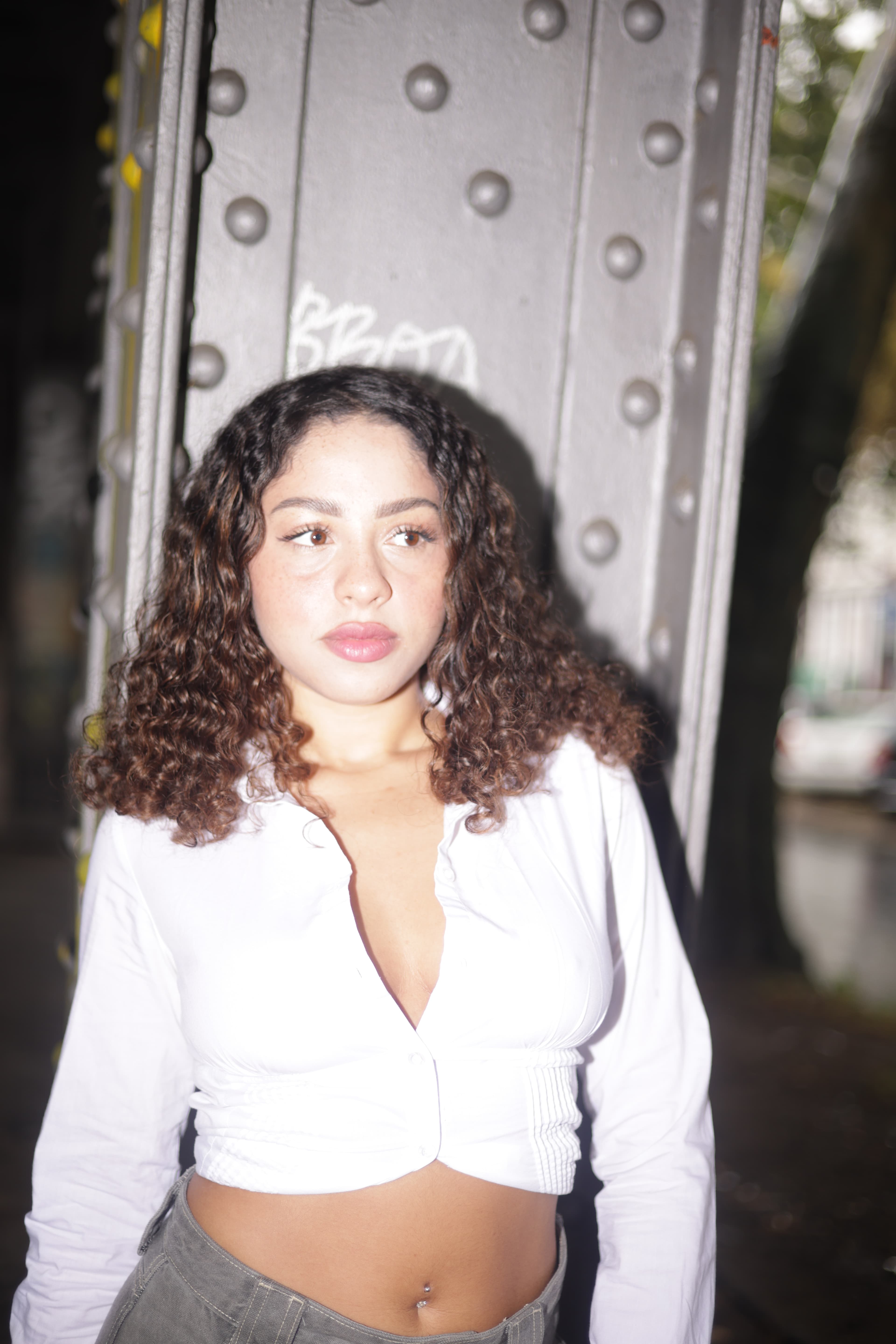

The break started with a gig. In February, she flew to Berlin alone to play at Polyamor, a venue in the city's Latin and electronic scene. Four days in the city. It was freezing. She didn't care.
"The room was full," she says. "And what they paid me was good. I thought, if I can play four times a month here, I'm earning what I earn working forty hours a week."
She fell in love with Berlin in winter, which, she notes, is the harder way to do it. Most people arrive in summer and get seduced by the long days and open-air parties. She saw the city in the dark, cold and unfriendly, and chose it anyway.
Back in Madrid, she asked her employer for an excedencia, a leave of absence that holds your position for a year. She booked a one-way flight for April 27th. There was no return. Her parents were not happy. "They were like, you're crazy," she says. "You have a good job here, at a multinational company. What do you mean you are going to be a DJ?"
She went anyway. The room she had arranged fell through before she arrived. A friend from Madrid shared an Airbnb for a week. She had seven days to find a job, a room, and a reason to stay.
On the last day of the Airbnb, a room she had found on Facebook was cancelled. She called her mother, crying. Her mother, who had done this exact thing herself twenty years earlier, said: "You can do this. You have been through so many things. Be positive. You are going to find something."
One hour later, a listing appeared. An apartment in Prenzlauer Berg, a viewing that same day, a beautiful room. She showed up in tears. They asked if she had a job. She said she had savings. They called her on Sunday. She had a home.
“I use what I got. And it just brings me more.”
— FORTUNATABefore she moved, FORTUNATA had done something that most aspiring DJs talk about but rarely execute. She sent cold messages to tons of promoters, venues, and collectives in Berlin. Not a generic blast. Personalised messages, her mixes attached, her vibe explained. Most never replied. But enough did, and those became bookings she would not have had otherwise.
"You cannot think that people are gonna come to you if they don't know you," she says. She is precise about this. She thinks that's nonsense. "I don't chase, I attract. But you cannot attract what doesn't know you exist."
She also signed with a Berlin agency before arriving. The letters were beautiful, she says. The promises were exciting. The reality was different. Over six months, the agency found her two bookings. She booked herself ten more in the same period. They didn't understand her sound. They were a Berlin-based underground trance collective. Her Latin energy didn't fit their identity.
She left. And she learned something she now believes completely: as a developing DJ, you don't necessarily need an agency. You need to be good, and you need to spend half an hour every free day pitching yourself.
The thing that confuses people about FORTUNATA is the range. She plays house parties and techno nights. She plays R&B sets and Latin-Caribbean parties. She has been booked alongside DJs who would never appear on the same lineup, and she has delivered every time.
Asked to define her sound, she resists. "I couldn't close Fortunata into one bubble," she says, "because me, as Nataly, I've never been able to stay in one place." She connects this to something deeper than genre flexibility. She changes direction constantly and she knows it. She's stopped fighting it.
"Maybe to grow my career, I need to just go down one road," she says. "But actually, when I'm in some lineups, I'm the most different artist on the bill. And people like it. So why close myself off?"
What she brings, she says, is not a genre but a vibe. The vibe is rooted in two places: Barranquilla, with its cumbia and vallenato and reggaeton, and Madrid, where she discovered electronic music. She mixes both origins into every set. Latin percussion over techno kicks, Caribbean grooves inside four-to-the-floor structure. On paper it shouldn't work, but it does.
Berlin has changed her. She says this plainly, without romanticising it.
"This city will bring the best version of you, or the worst," she says. "It makes you connect with all your trauma, all your fears, everything you have been trying to hide." She pauses. "That's why there's the darker side too. The escapism, the nightlife that never stops. Because if you don't want to sit with that part of yourself, this city gives you every opportunity to disappear into something else."
She chose to connect, and she's in a healing process now, she says, working through years of things she carried from Barranquilla to Madrid to Berlin without ever unpacking. She has the independence she wanted, her own place, her own routine, mornings that belong to her. All of it arrived. And with it came the work of figuring out who she actually is when no one is watching.
"I can be whoever I want to be," she says, "and no one can tell me anything."
She is aware of a pattern in herself: the tendency to chase the next thing the moment the current thing arrives. She got the freedom she wanted. Then she wanted the career. Then the recognition. She is trying, deliberately, to break the cycle. To sit with what she has. To notice that she is playing some of the best clubs in Berlin after less than a year. That this is not small.
"Sometimes I don't magnetise it," she says. "I'm playing these clubs, five times a month, and my mind says, it's not that big. But it is."
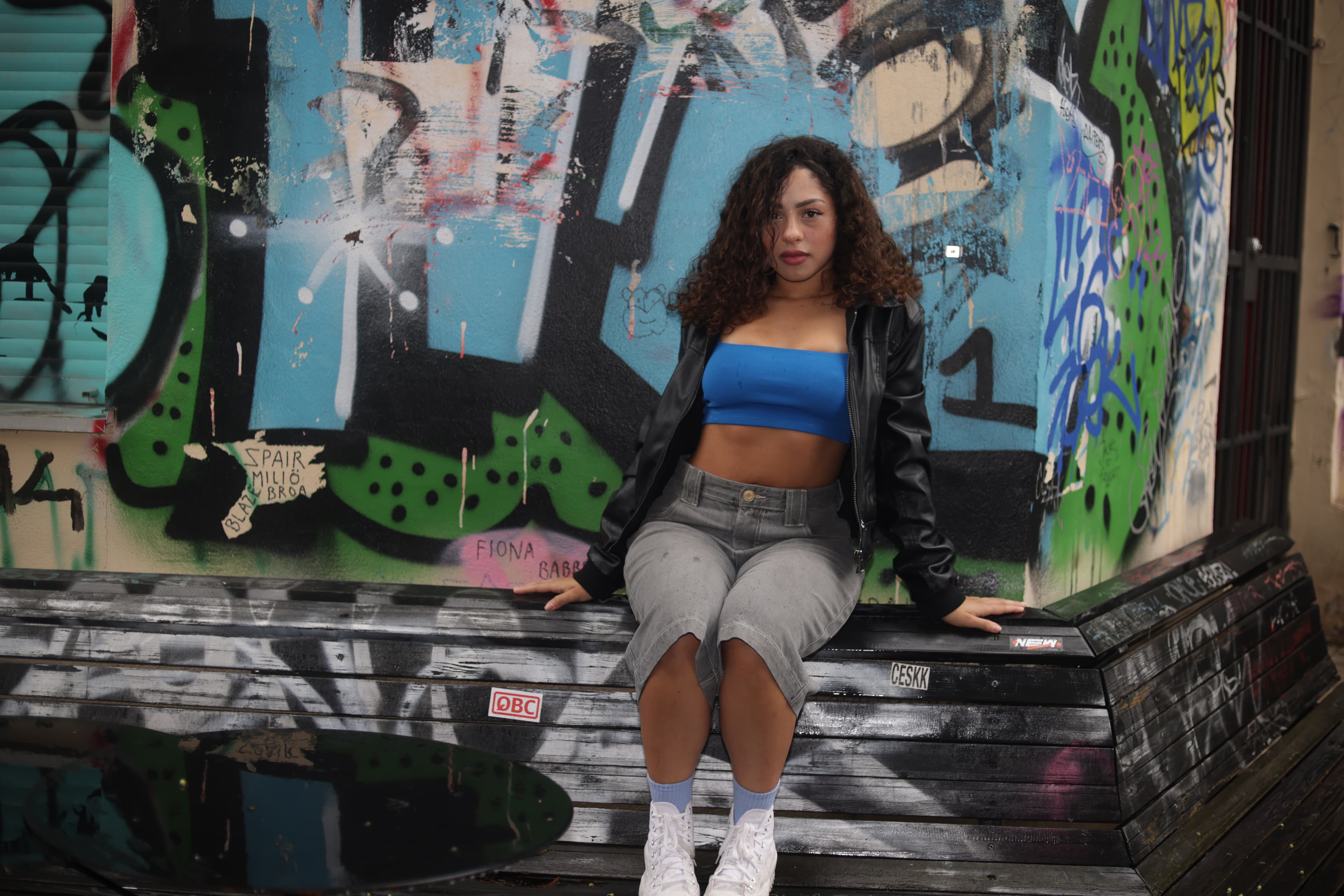

Being a woman in this industry is a subject she approaches without illusions. She has learned to read situations fast, specifically with male promoters and producers.
"So many times, you think, he really booked me because he believes in my work," she says. "Then he starts implying things. And after you shut that down, suddenly there is no work anymore." She is measured about it, not angry, just clear. It has happened enough times to be a pattern, not an incident.
It has also pushed her toward a specific goal: producing her own music. Most of her collaborations so far have been with male producers. She doesn't want to depend on anyone for her sound. "One of my goals for next year is to produce my own music," she says. "I don't want to need anyone to make it."
She is frequently the only woman on a lineup. She says it feels good, actually, because female DJs tend to find each other at events and support each other quietly. But she pushes back on the idea that gender equity in the industry has been achieved. "Go look at any lineup," she says. "Count."
She also refuses to change how she presents herself. She likes to look good. She likes to be sexy. She is aware that this invites a specific kind of criticism from people who assume presentation and talent are inversely correlated. She has thought about dressing differently, baggy clothes, neutral, and rejected it. "Why should I think about what to wear so that people don't think I'm only here because of how I look?" she says. "That's their problem."
This Friday, she is launching something new. A podcast called Candela y Fortunata. Candela means fire. Fortunata, her stage name, comes from her mother, who suggested it when FORTUNATA first said she wanted to perform. It is a play on her real name, Nataly: For-tuna-ta, Nata. In Italian, Fortunata means abundance. In Spanish, Fortuna means luck. She thinks about this often.
The podcast is long-form, not short content. She hates short content. "I'm not a short-form person," she says. "I need twenty minutes to tell you one thing." She wants a space where she can talk about manifestation, healing, immigration, the things Instagram's algorithm buries beneath thirty-second clips. She wants people to leave her content feeling like they got something back, not like they just scrolled past another DJ playing in their bedroom.
"I don't want Fortunata to be only superficial," she says. "Instagram is superficial. You can't be cringe, you can't be too real. I want a space where I can just be me."
The first episode is about the pattern she named earlier: wanting something, getting it, immediately wanting the next thing. She is talking about it publicly because she believes sharing it is part of fixing it. It's the same thing she always does, act first, figure it out later.
"I have my mini controller," she says. "Maybe it's not that serious compared to CDJs. But it's what I got. And I just use it."
She grins and looks around. The cupcake shop is closing up around us.